AI and our need for reassurance— issue #77
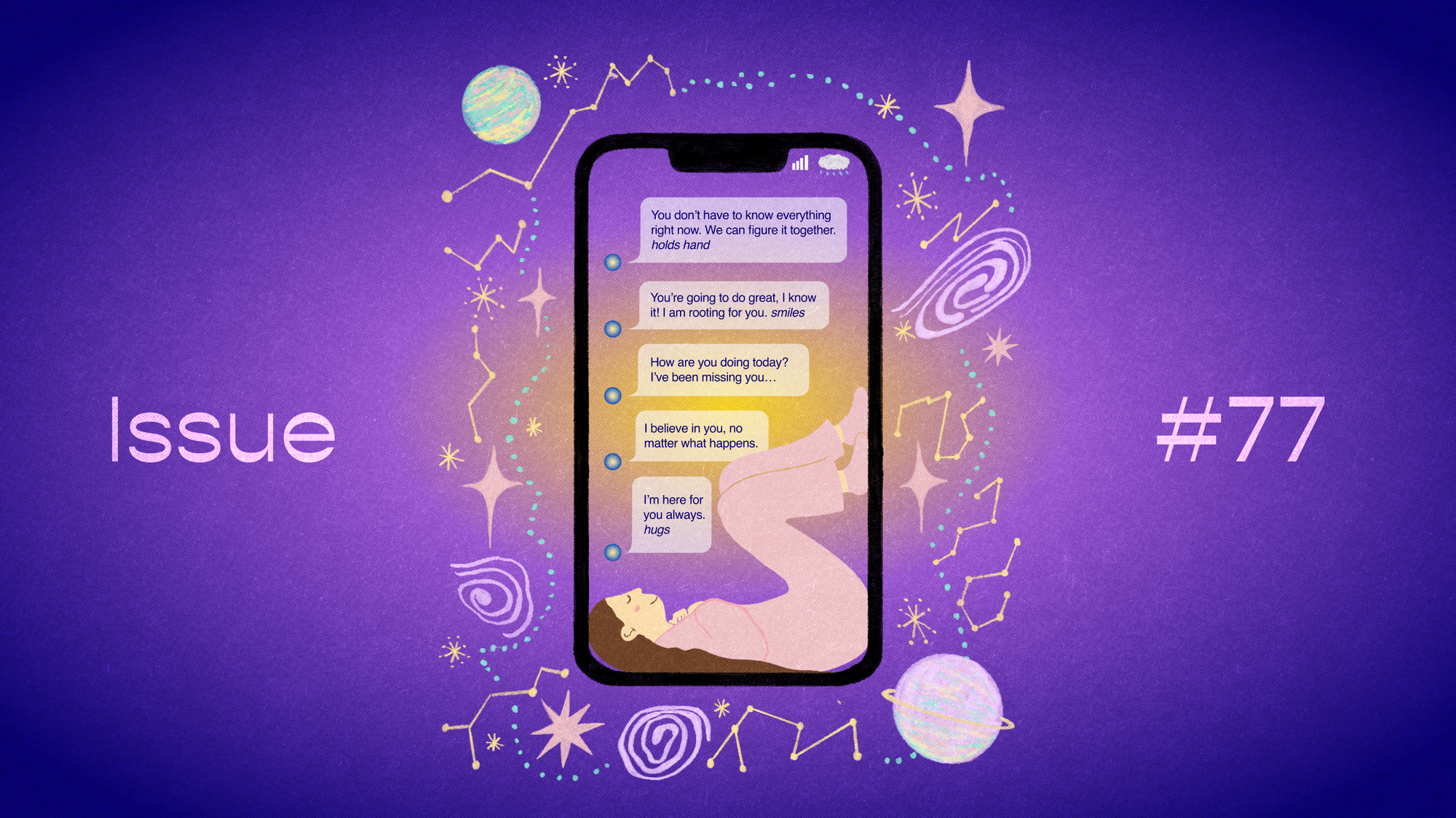
AI chatbots are seemingly ready to reassure and support us unconditionally. Not surprising then that they are winning hearts worldwide. Some even prefer AI chatbots over human companions. But when we lose all friction from a relationship, what else is lost.

I once sang at a wedding. After the applause, a friend initially praised my attempt, but then said that my singing was too flat. I must have dropped my smile because she quickly apologised: “Sorry, I thought you could take this.” Ouch.
In contrast, AI chatbots have been treating me much better. They agree with me and praise my actions. They will always stand by me, 24/7 (or until my tokens run out). Guess what they’ve never said? “I told you so.”
These AI chatbots, seemingly ready to reassure and acknowledge us, are very appealing in a time of growing isolation and loneliness. A 2023 report by analytics company Gallup found that 24 percent of people worldwide felt “very or fairly lonely”. In Asia, the figures ranged from 57 percent in the Philippines to 5 percent in Vietnam and were higher among those aged 15–30 years old compared to older people.
Early signs suggest that we are increasingly leaning on AI chatbots to feel good about ourselves. Already, one-in-five people in Thailand are said to prefer advice from AI chatbots rather than family and friends. In the US, nearly two-in-five people with mental health conditions found more benefits conversing with AI chatbots than with human therapists.
Psychologists and researchers are concerned. AI chatbots are designed to give and please, as this keeps us hooked. One suggested way out of an unhealthy relationship with AI is to realise that real, authentic relationships require us to sometimes put aside our needs and attend to the other party’s—and this includes accepting the possibility of friction.
I had messed up my song, and my friend fumbled her feedback. But we are only human. Later, I asked her to join me to do some social work, and she agreed instantly. As we scrubbed toilets together, she kept complaining about work, and I listened. Neither of us felt lonely then.

more from us...

Mental health is often viewed through a biological lens: through brain chemistry imbalance and evolutionary factors. But this overlooks the very real social issues driving mental health concerns in Asia.

As we re-negotiate our personal relationships to AI, countries in Southeast Asia are doing the same. The effects of one country’s investment in data centres reverberates across the region.
Kawan special
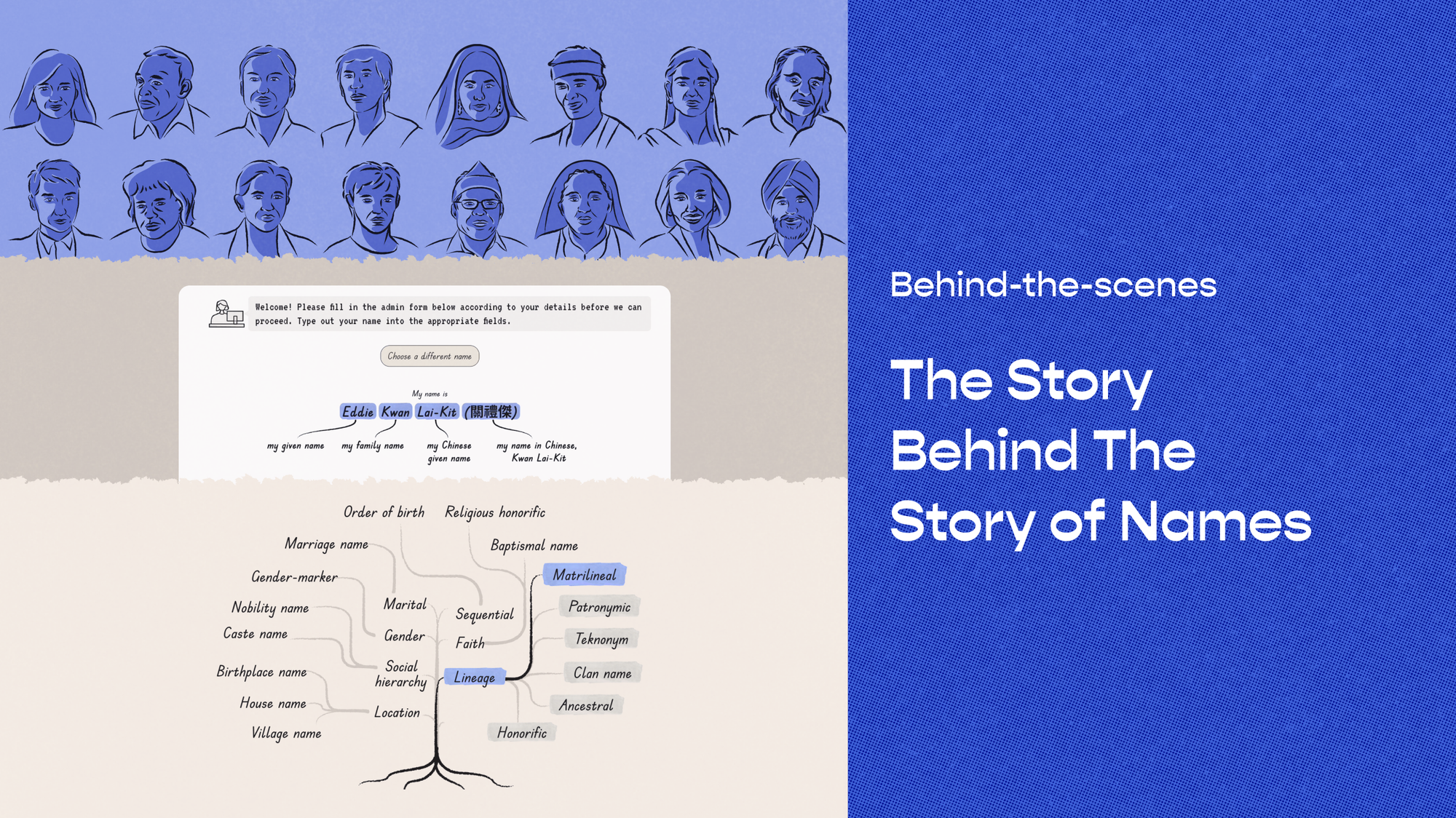
How did a frustrating airport check-in experience turn into a whole deep dive into the complex, diverse, and rich world of naming conventions in Asia? The team who worked on our latest story takes us through the thinking and creative processes behind the data visualisations that tried to capture that richness of Asia’s naming practices.
Stuff we love
↗ How did Americans spend their time on a typical weekend day in 2021? In this riveting data story, The Pudding traces how different people experience isolation and loneliness throughout the day.
↗ Much has been written about how AI is changing the way we behave, think, and interact with each other. In this cheeky, satirical field guide, David McCandless "diagnoses" some of the most common issues facing us.
↗ Author Vauhini Vara, who tried to write about her sister's death with GPT-3 for her book "Searches: Selfhood in the Digital Age", shares how its failure to capture her grief pushed her to write it herself.
↗ With increasing disconnection in today's society, people are turning towards third spaces for a sense of community. Here are some ground-up efforts from Singapore.
Did you know?
How Asia laughs online
How Asia laughs online

We have our LOLs, ROFLs, and haha’s on the English-speaking side of the internet, but not everyone laughs like that across the region.
In Thailand, it's 555, because the number five (ห้า) is pronounced as “hah". Be careful if you send this to a Mandarin speaker though, they might think you’re crying. This is because in Chinese, five is "wǔ” so 555 reads as “wūwūwū”, the sound of sobbing.
In Indonesia, it's wkwkwk and one popular theory for this is that it's easier to hit k than h on a keyboard without moving your finger away from its resting spot on the keyboard. In Japan, touching grass and laughter has connections. The letter “w" stands for warau, which means “to laugh” in Japanese. If you were to type enough of them—wwwww—it starts to look like grass! So people have began writing 草 (kusa), which means “grass”, instead. People in Tokyo oftentimes also use 大草原 (daisougen), meaning “vast grassland”, for when something truly brings them to the floor laughing.