The Story Behind The Story of Names
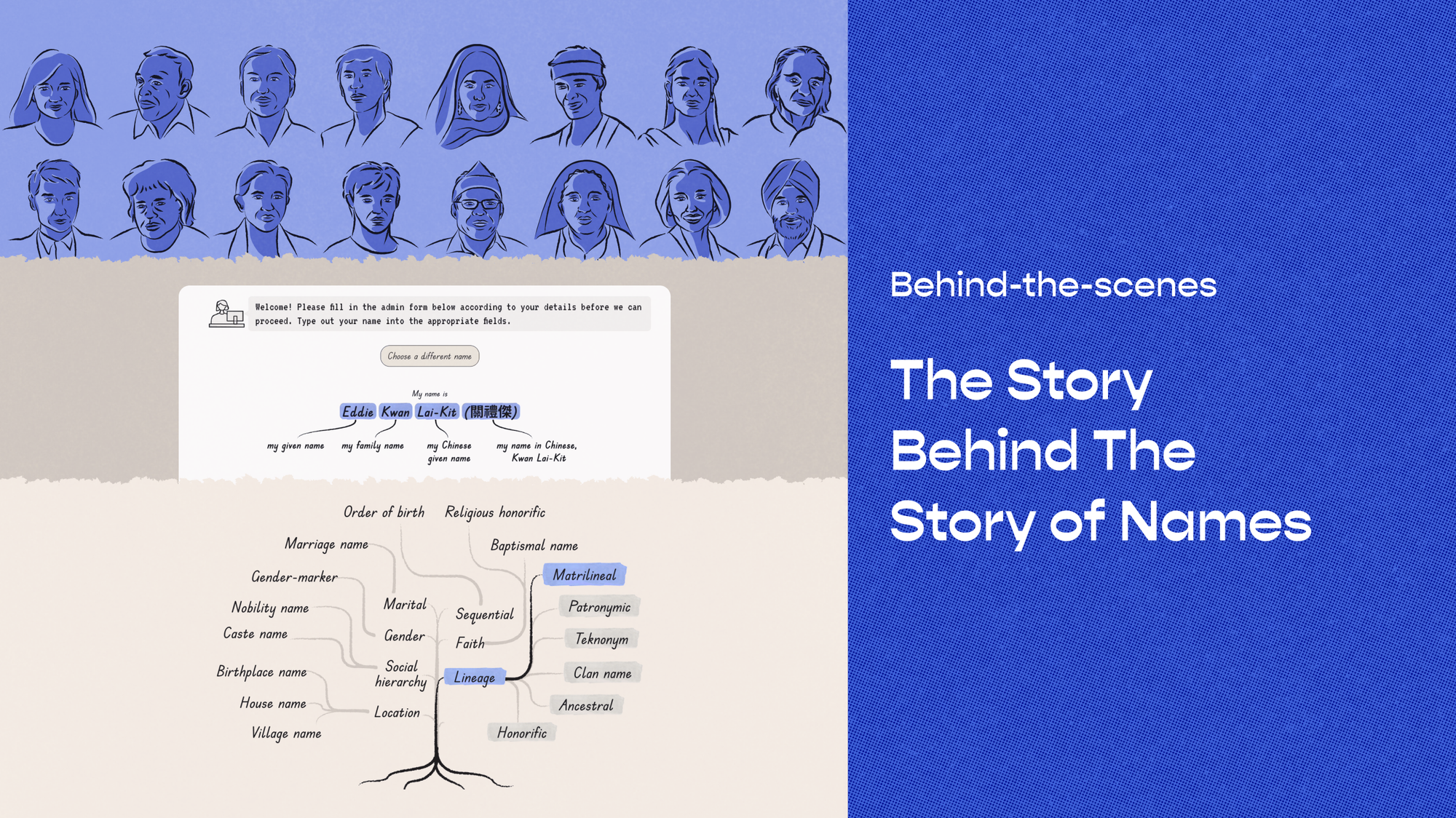
The team behind our latest story on Asia's naming conventions dives into how they got inspired to produce the story, researching qualitative data, creating a speculative name explorer, and crafting relatable humorous grievances for this story.

Nabilah: This story about Asian names all started with a frustrating airport check-in experience. I had found myself in a special queue to get my boarding pass printed, when the self-service machines refused to accept my name as valid. “Name does not match booking, please approach counter for assistance.” I’m very used to seeing this error message, as it’s happened many times before. Sometimes, the officer assumes I’ve used the machine wrongly, walks me over to another machine, types in my name, and encounters the same message. There are variations to this—getting an email addressed to “Ms Said” (Said is my dad’s name, as Malay names are patronymic), or sometimes, more egregriously, having to squeeze three parts of my full name into the “Last Name” field, creating a frankenstein last name that I don’t technically have.
Yet Asian names hold such rich meaning, significance, and sometimes, even resistance. These everyday frustrations, combined with a need to illustrate the beauty of Asian names, led to this story.
The Research
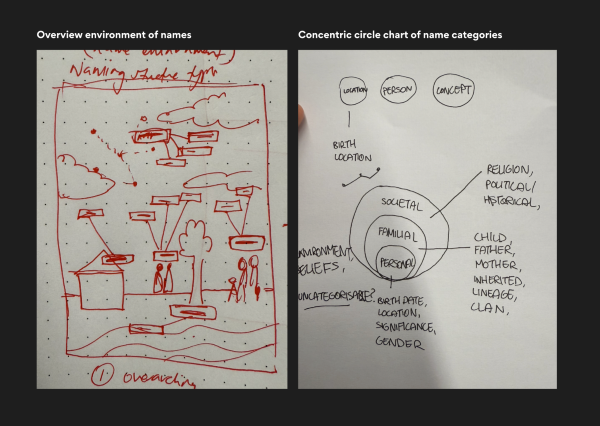
Munirah: For the research, we first had to establish a consistent terminology related to how a full name is structured.
The typical Western naming structure is First Name – Middle Name – Last Name. But we found that Asian names have highly diverse structures across different conventions, and we had to break down these name components further. Take the name Siti Nurhaliza Binti Tarudin as an example. "Siti Nurhaliza" is her given name, and "Tarudin" is her father's name which is joined with a preposition “Binti”, meaning daughter of.