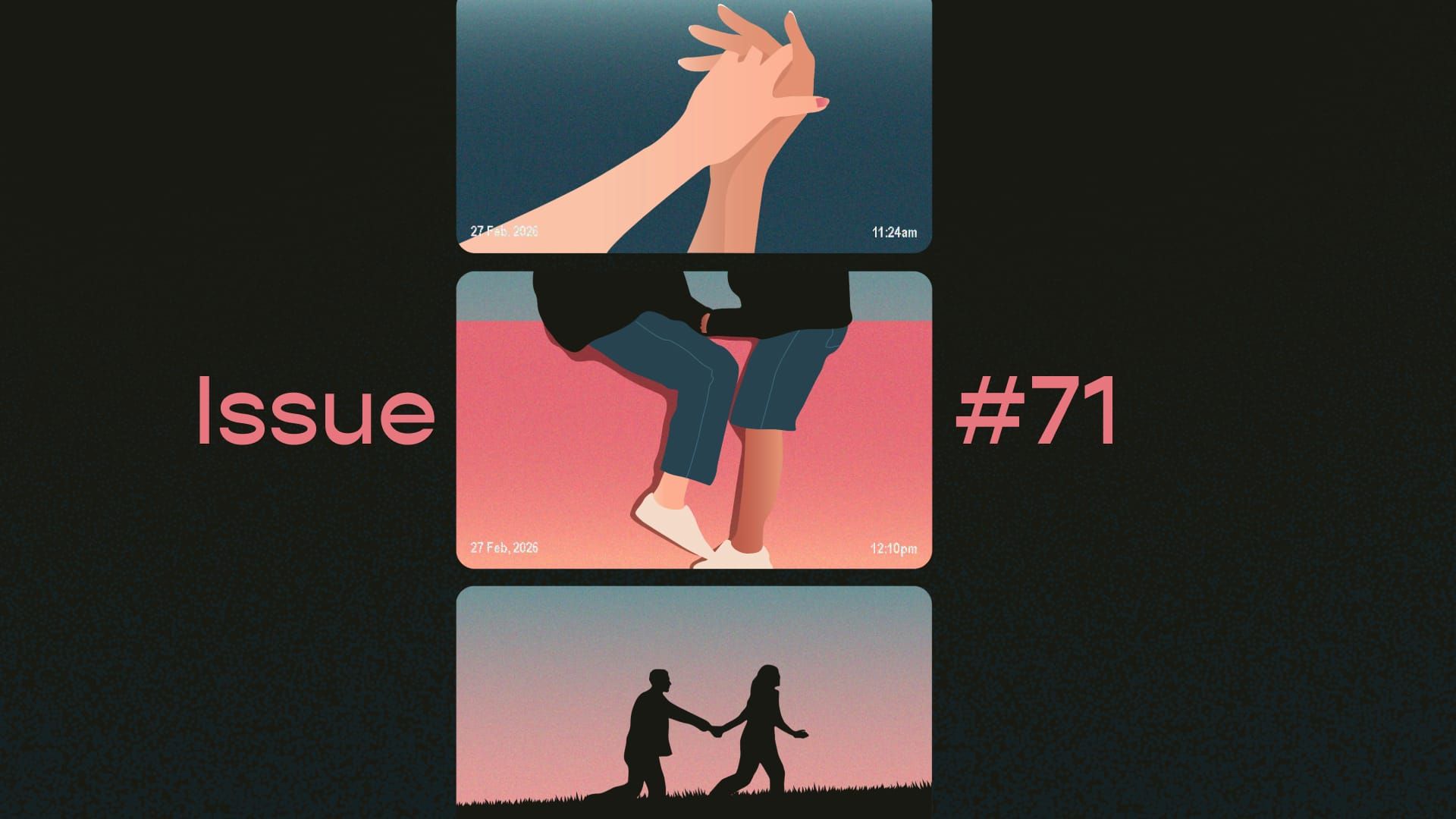
There’s enough love to go around— issue #71
They say love can overcome any differences, but recent media trends may say otherwise. What does this mean for our society as a whole?

Back in Jakarta, I have a neighbour who has been faithfully playing a medley of Bollywood songs almost every day for the past two decades. One song gets more airplay than the others, the sound so familiar that I can almost sing it from memory. I learned recently that it is Chalte Chalte, the theme song from Mohabbatein. In the film, Narayan is the strict principal of an all-boys school who forbids his students from falling in love. What follows is a blossoming romance between three pairs of students, and the music teacher who encourages them despite everything.
People have always been drawn to love’s power to overcome all odds. From Beauty and the Beast to Heated Rivalry, tropes like forbidden love and enemies-to-lovers continue to remain popular across time. What endears people to romance often isn't how good the couples would be in real life, but the chasms they can cross. Can a royal be together with a civilian and close the class divide? Can two lovers from disapproving families stand together against cultural divisions? A good love story can invite viewers to imagine what a better society could look like.
Even so, this imagination can be limited. For Bollywood, the state has become its own Principal Narayan, with filmmakers often obligated to toe the line. In our recent story with Surbhi Bhatia, we analysed Bollywood’s shift from its iconic romance films to action films that glorify only one kind of love: a man’s devotion to the country. But perhaps the limitations have always been present. The romance genre has its share of biases in Hollywood too, promoting sexist norms and lacking diversity.
The lack of diversity is often blamed on lack of demand, but that doesn't hold up anymore. The Thai Boys’ Love industry is thriving, and compared to other queer-coded media in the past, some recent television shows’ posters have boldly made their gay interracial couples the main selling point. A sign of progress, maybe, but how long are sidelined groups satisfied with seeing themselves represented for the sake of marketing?
Representation is one step, but we shouldn’t stop there. Ultimately, people want nuanced love stories that bring together people of all backgrounds, reflecting the richness of the world around them. After all, as a student says in Mohabbatein: “One doesn’t compromise in love, right?”

more from us...

Boys’ Love dramas may be super popular in Asia, but do they really change on-the-ground opinions regarding same-sex relationships?
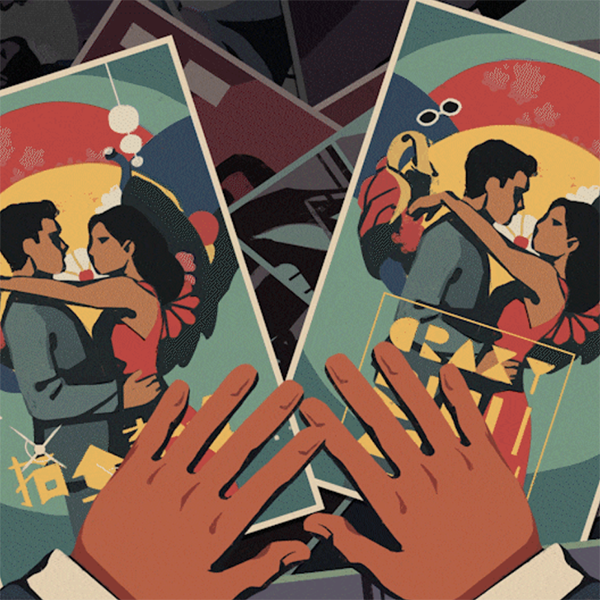
Crazy Rich Asians is seen as a cultural turning point in west-dominated cinema, but this also exposes how underrepresented Asians really are.
Kawan special
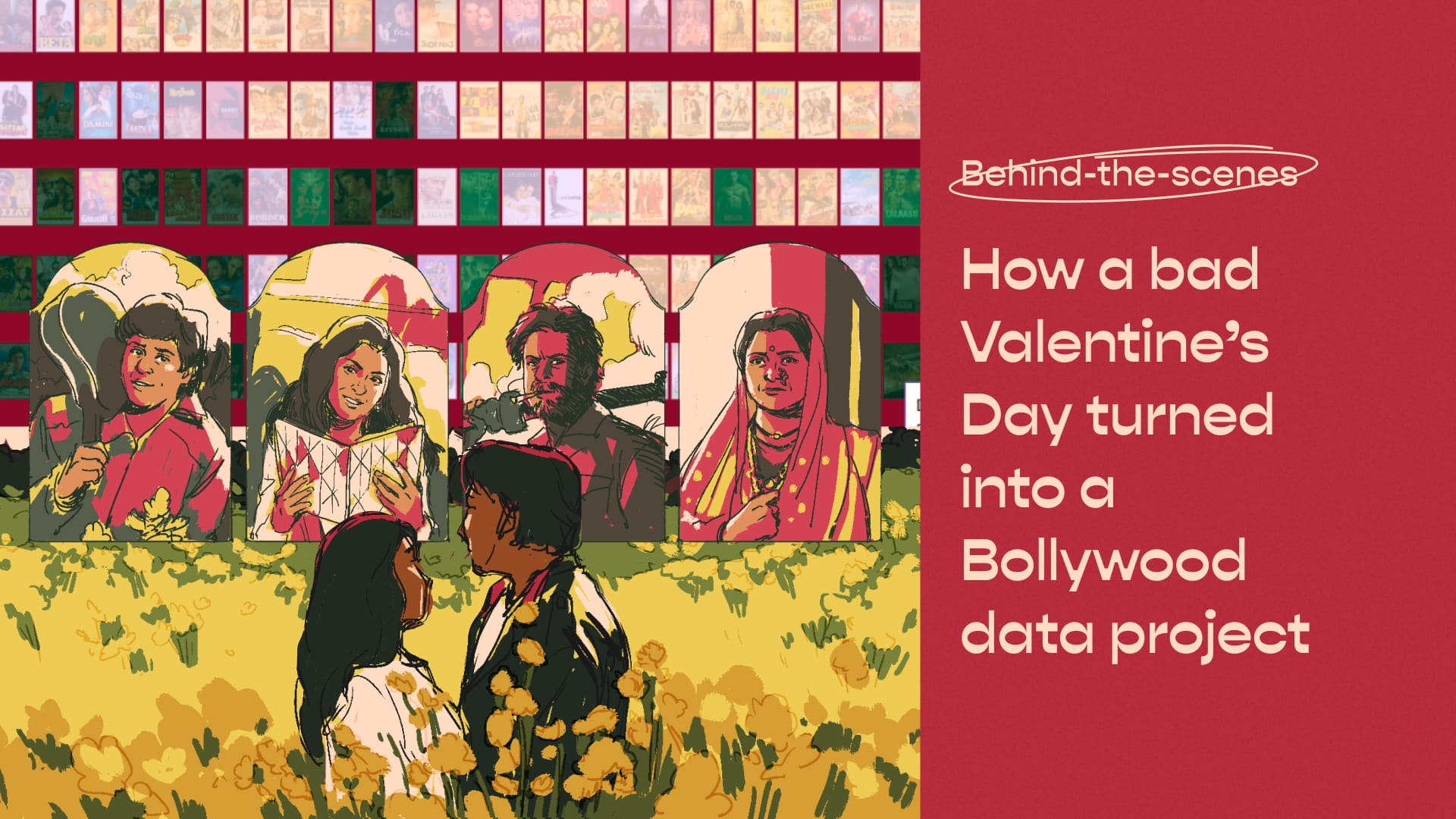
How did a bad Valentine’s Day turn into a deep dive into Bollywood films? The team behind Bollywood falls out of love shares how they researched the films’ dataset, and used large language models to classify genres.
Stuff we love
↗ Sapphic or women-loving-women films, compared to Boys’ Love, are under-represented in many Asian countries, including the Philippines. Read filmmaker Samantha Lee’s perspective on why.
↗ Unpack how virtual dating simulators can be a medium for participatory art and a critical commentary on problematic romantic social norms.
↗ Sunaina Patnaik explores Chinese drama tropes and how it's weaponised by big tech.
↗ If you watch K-dramas, you must be familiar with the second lead syndrome trope. Read why they make such good (yet heartbreaking) plot devices.
Did you know?
An amicable split: Legend of Lạc Long Quân and Âu Cơ
An amicable split: Legend of Lạc Long Quân and Âu Cơ

According to traditional Vietnamese folklore, Lạc Long Quân, a sea dragon lord, met and fell in love with Âu Cơ, a mountain princess. They married and had 100 children. However, they were incompatible as they belonged to different realms, and eventually parted ways, dividing their children equally between them. Lạc Long Quân returned to the sea with 50 children, while Âu Cơ settled in the Red River Delta with the remaining 50. One of her sons became the first Hùng King, who later ruled Văn Lang, said to be one of the earliest Vietnamese kingdoms, and established the ancestral lineage of the ethnic Vietnamese people.