Behind the Seams: Wax & Stitch Workshop


How the idea started
At Kontinentalist, most people know us because of our stories, but we’ve always been interested in making data more approachable and relatable to people’s daily lives.
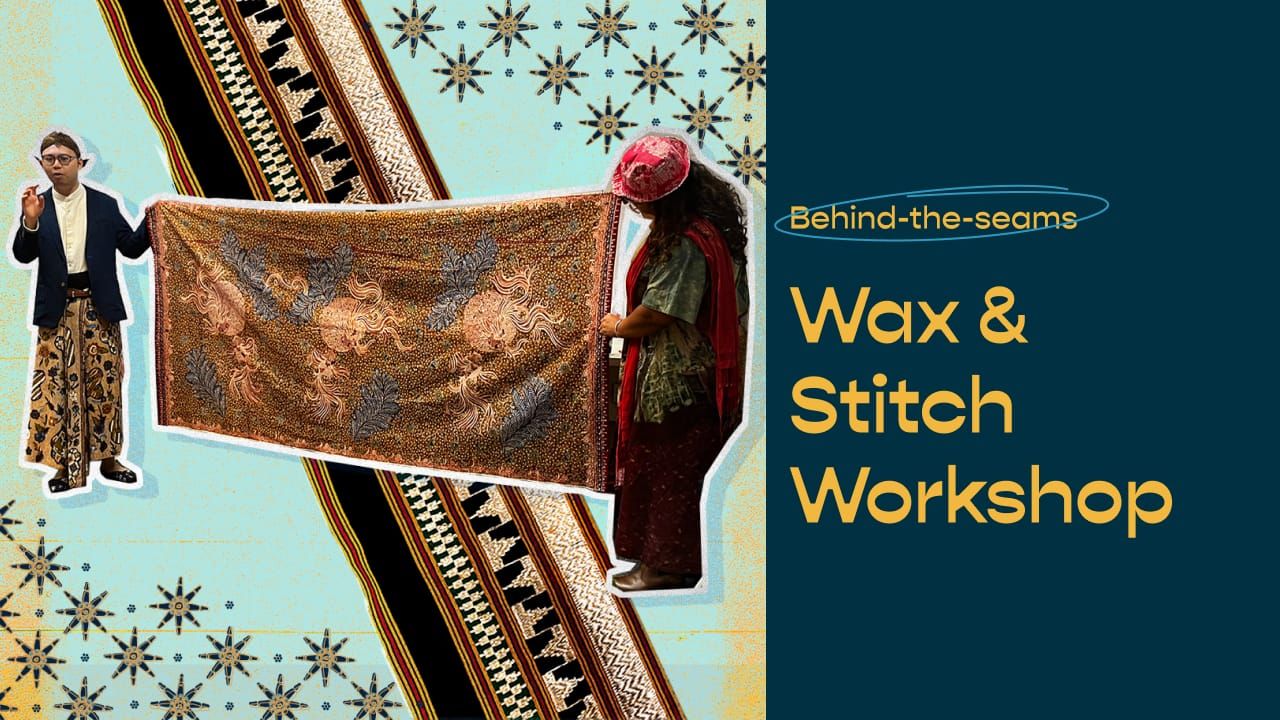
So it was serendipitous when we met Hafiz Rashid, an experienced museum docent and self-proclaimed “Nusantara otaku” at our New Year’s Dinner Party at the start of 2024. We started excitedly talking to Hafiz, whose research interests include textiles, indulging in some mutual fangirling, and eventually spoke about our sarong story.
An idea soon emerged to collaborate on a batik storytelling workshop. For Kontinentalist, we wanted to pay homage to traditional forms of storytelling present in Southeast Asian culture, which often comes in the form of oral storytelling, as well as visually, through textiles. Batik is pretty popular in Singapore, but how many know about the stories a batik garment can contain?

Planning the workshop structure
Knowing that the main draw would be Hafiz’s expertise about batik, we dedicated a large portion of the workshop to his lecture. There were several themes we wanted to explore, such as the different motifs, colours, and craftsmanship that batik-making entailed. We also wanted to acknowledge the ways that batik was heavily influenced by external factors, such as colonialism and socio-economic changes. Lastly, in line with Southeast Asia’s rich oral storytelling heritage, we encouraged participants to bring their own batik pieces to the workshop so that we could gather “data” via the stories they contained. This could also help our participants understand the meaning of the pieces they wear. Some even brought family heirloom pieces!
Batik/sarong as a form of resistance
This section organically came up during our brainstorming session. We realised that there was one common theme that emerged between Hafiz’s batik history knowledge and Zafirah and Munirah’s sarong story: sarong and batik were greatly impacted by colonial interests, and artists have used them as tools of resistance/decolonisation.

Diving deep into batik craft
This section was dedicated to the batik craft, diving deeper into how they’re made and the meaning behind various patterns and motifs.
We wanted hands-on activities to help participants realise that data is quite literally everywhere! They can tell data stories through their own batik items and share these stories behind their batik. We also wanted to convey the level of intricacy and fine craftsmanship that goes into these textiles, highlighting how the people who make them, and the production process itself is also part of that batik’s story.
For the activities, we identified three simple types of data for participants to collect:
Geographical data. Where the participants’ batik pieces come from. To support this activity, we created a map for people to put stickers on so that we could get a sense of where everyone’s pieces were from. Most of the batik were from Java, Indonesia, but we did have a couple from Terengganu, Malaysia, as well!

Pattern types. A lot of batik patterns have their own names and their own distinct meanings. We wanted participants to identify these patterns in their own pieces. That being said, one specific piece often combines several patterns. To make this simpler for our participants, we asked them to identify parts of their batik, draw them on a post-it note, and put them into three categories: geometric, flora, and fauna.


Stories and origins. We knew that some things can’t be quantified, like emotions or the personal significance of these batik pieces. So we wanted to give participants the opportunity to share any interesting story behind their batik pieces—for example, how did they acquire it? Was it passed down from generation to generation? Did they buy it during a memorable trip? Do they associate certain emotions with the piece? This data was quite qualitative and flexible.
The actual experience
The first rule for any Kontinentalist event is that we do not do any events without food and snacks in order to create a regional vibe for our events. We love sourcing treats from local stalls, like epok-epok. And Hafiz, armed with incredible interior design and hosting skills, transformed our classroom into a beautiful living room with bunga rampai and rattan mats. These thoughtful details supported the themes of our workshop, paying homage to our rich Nusantara heritage. This helped to create a chill and homely feel, allowing people to learn in a comfortable, and familiar, environment.


We had to be quite flexible when it came to the actual workshop experience, deviating from some of our plans and shifting sections around to facilitate the rich discussions that happened organically throughout the session, even during Hafiz’s lecture itself. We didn’t actually manage to do our activities in the order we intended (lost in the sauce, as we like to say), but we improvised and combined them together. For instance, we originally planned to separate two activities that were going to explore the origins of participants’ batik pieces and a discussion section where they were going to present some of the pieces they brought. Instead, we re-adapted those sections and asked a few participants to volunteer and present their batik pieces, including where they originated from, then discussed and investigated these origins together as part of the hands-on activity. This worked out better as a lot of people don’t know where their batik comes from since it’s so widespread and easily purchasable. We all got to learn something new together!

-
All in all, we felt grateful to have been part of a workshop like this where our participants were actively engaged throughout. Can’t believe this was our first such event! It felt more like an extensive sharing in a friend’s living room than it did a traditional workshop, and it totally suited our vibe! As Hafiz and we (yes we’re besties now) love to say, ”When we throw an event, we go all out!” We received a lot of positive feedback after our event, with many even encouraging us to do a second iteration of the workshop, so stay tuned to more from us!